
Introduction
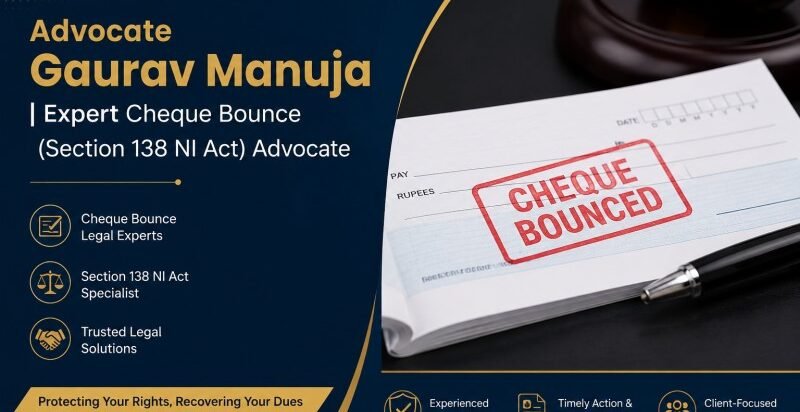
A cheque is one of the most commonly used payment methods in business and personal transactions. However, when a cheque is returned unpaid due to insufficient funds, a closed account, or any other valid reason, it can create financial loss and legal complications. In India, cheque bounce cases are governed by Section 138 of the Negotiable Instruments Act, 1881 (NI Act). If you are facing a cheque dishonour dispute, Advocate Gaurav Manuja provides professional legal assistance to help individuals, businesses, and organizations protect their rights and recover their dues efficiently.
Understanding Section 138 of the NI Act
Section 138 of the Negotiable Instruments Act deals with the offence of cheque dishonour. When a cheque issued for the discharge of a legally enforceable debt or liability is returned unpaid, the drawer may face legal consequences if the payment is not made within the prescribed time after receiving a legal notice. The law aims to maintain trust in financial transactions and discourage the misuse of cheques.
Common Reasons for Cheque Bounce
Cheques may be dishonoured for several reasons. The most common include insufficient balance in the account, signature mismatch, account closure, overwriting or alteration on the cheque, expired cheque, payment stopped by the drawer, and incorrect account details. Identifying the exact reason for dishonour is essential before initiating legal proceedings.
Legal Process in a Cheque Bounce Case
The legal process begins when the bank issues a cheque return memo stating the reason for dishonour. The payee must then send a legal demand notice to the drawer within the prescribed period. If the drawer fails to make the payment within the legally specified time after receiving the notice, the payee can file a complaint before the competent court under Section 138 of the NI Act. Timely legal action is crucial to safeguard your rights.
Legal Services Offered by Advocate Gaurav Manuja
Advocate Gaurav Manuja provides comprehensive legal support for cheque bounce matters. His services include drafting and sending legal notices, filing and defending complaints under Section 138 of the NI Act, representing clients before the trial court, handling settlement negotiations, preparing legal documentation, and providing strategic legal advice for both individuals and businesses.
Why Choose Advocate Gaurav Manuja?
Cheque bounce cases require careful legal drafting, proper documentation, and timely action. Advocate Gaurav Manuja focuses on understanding every client’s case in detail and offers practical legal solutions tailored to the specific dispute. His professional approach, attention to legal procedures, and commitment to protecting clients’ interests make him a trusted choice for cheque bounce litigation.
Documents Required for Filing a Cheque Bounce Case
To initiate legal proceedings, certain documents are generally required. These include the original dishonoured cheque, the bank return memo, a copy of the legal notice, proof of delivery of the notice, and any supporting documents establishing the underlying debt or liability, such as agreements, invoices, receipts, or correspondence.
Importance of Timely Legal Action
Cheque bounce cases are subject to strict statutory timelines under the Negotiable Instruments Act. Missing these deadlines may affect your legal remedies. Seeking legal advice immediately after receiving the cheque return memo helps ensure that all procedural requirements are fulfilled within the prescribed time.
Conclusion
If your cheque has been dishonoured or you have received a legal notice under Section 138 of the Negotiable Instruments Act, obtaining experienced legal guidance is essential. Advocate Gaurav Manuja offers reliable legal representation for cheque bounce disputes, helping clients recover outstanding amounts while ensuring compliance with all legal procedures. Whether you are a complainant or defending a cheque bounce case, professional legal assistance can significantly improve the outcome of your matter.